Finding Needle in Haystack
Summary
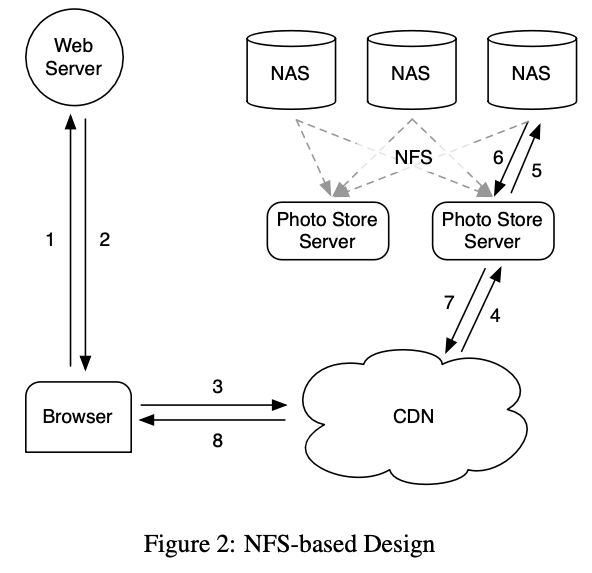
problems with serving photos with NFS approach
- wasted storage for not-used dir and file metadata (posix file system)
- requires to load metadata into mem first to then load file itself from disk. This results in more disk IOs for file read.
solution
- building a custom storage system
haystackthat can reduce the amount of metadata per photo hence less disk IO to achive lower latency and higher throughput. - use haystack to serve long-tail photos and CDN for popular photos.
result
- Haystack serves photos with less cost and higher throughput compared to previous design with NFS and NAS (Network Attached Storage).
- It is incrementally scalable.
design requirements
- high throughput low latency
- fault-tolerant
- more cost-effective than building for NAS
- simple
2-Previous Design
What did not work in NFS design?
- CDN misses the long-tail requests (older, less common photos) - typical for Facebook photos usage - which result in high latency. This is bad for user experience.
- Caching all in CDN is not cost effective.
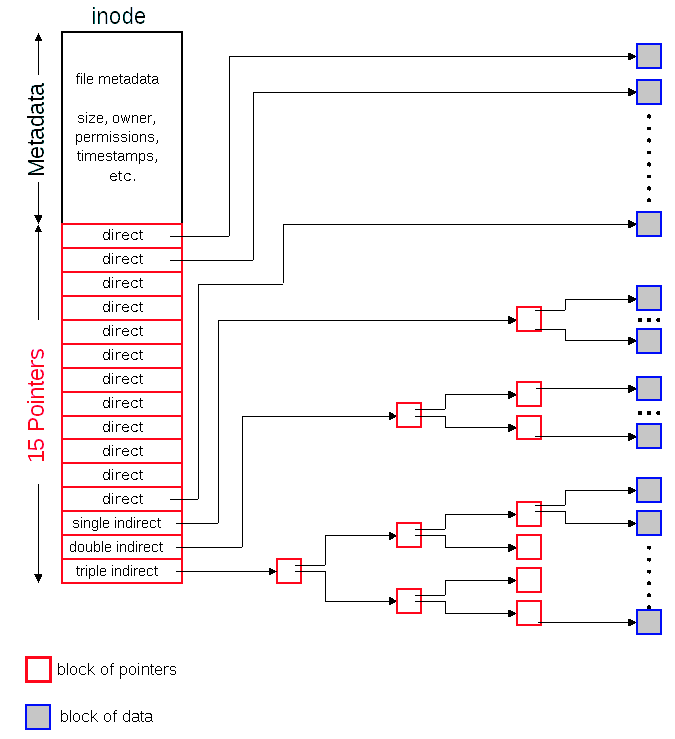
- Having enough RAM to cache all the inodes (~256 bytes each) is also not cost effective.
1 photo = 1 file = 1 inode = hundred of bytes
3-Haystack design
Haystack solves the solution by
- reducing the amound of metadata per photo to keep all the metadata in memory.
- storing multiple photos in a very large file to reduce metadata further.
This then reduces the disk operations that the storage systems need when doing a read. Using the typical POSIX inode design the amount of memory needed is 256 bytes * 2B * 1000 = 512TB for metadata alone.
System components
- Store: persistent storage system, manages fs metadata for photos.
- Directory: maintains logical to physical mapping and application metadata (how to construct the photo URL for app to access).
- Cache: internal CDN provides shield
Storeagainst CDN failure and frequent requests.
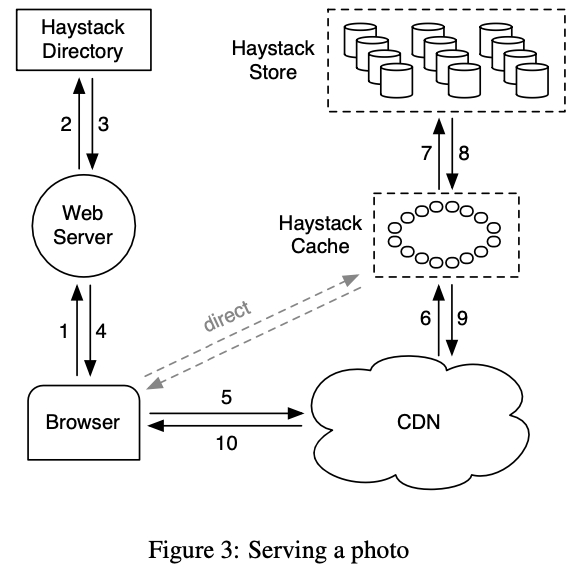
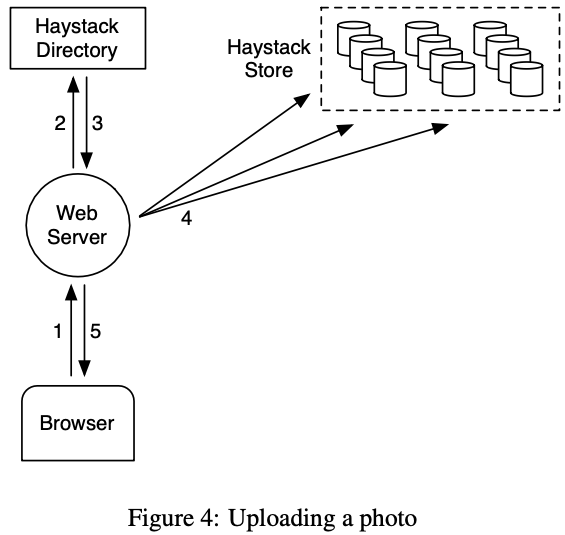
Haystack Directory
http://<CDN>/<Cache>/<machine id>/<logical volume, photo>Haystack Cache
Haystack Store
Key design decision: metadata operations (getting filename, location, offset, size) do not need disk IO.
- one Store machine manages many physical volumes
- Physical volume a very large file (100 GB)
/hay/haystack_<logical volume id> - one volume = millions of photos
- access photo (needle) using
(logical_vol_id, offset) - Store keeps
open file descriptorsfor all volumes- in-mem mapping (photo_ids) -> fs_metadata(file, offset, size_in_bytes,…)
Design
- Fig 5 layout of haystack store file
- one needle = one photo
- Table 1 fields in each needle
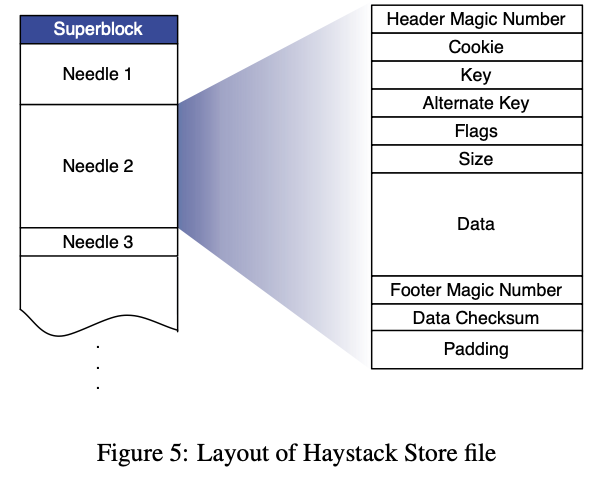
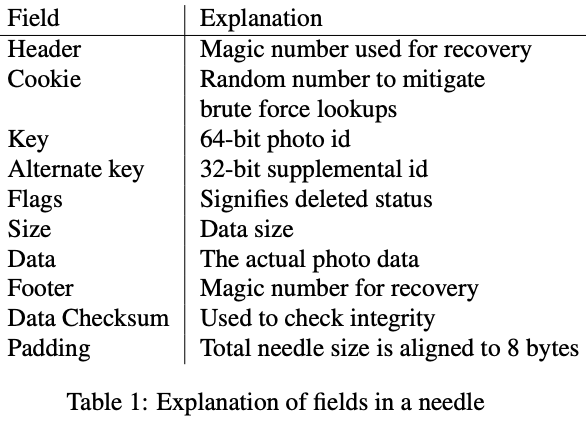
To get needle quickly
- each Store maintains in-mem data structure for each volume
- it maps (key, alternate key) -> (needle’s flags, size in bytes, volume offset)
- Store machine reconstructs this from volume files after a crash before serving request
Detailed designs of
- photo read
- photo write
- photo delete
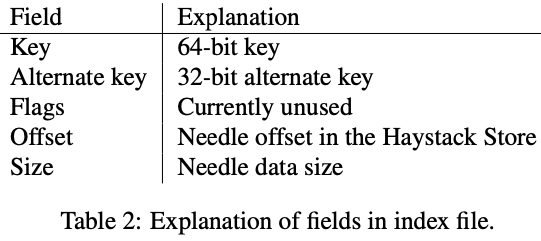
- index file
- filesystem
Photo Read
Photo Write
Photo Delete
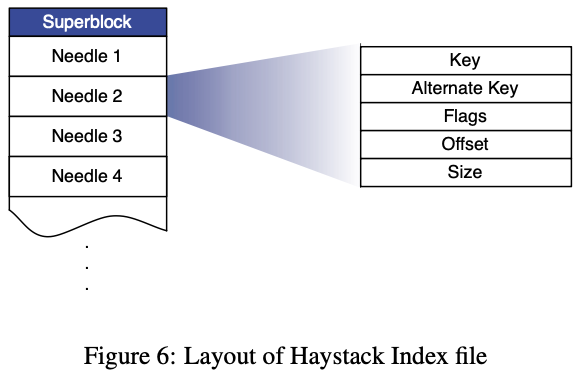
Index File
Design decisions: async index updates to reduce write latency
- write photo: sync append needle to volume, async append index
- delete photo: async set flags in needle, not updating index
Side effects to be tackled
- needles can exist without corresponding index records
- index records do not reflect deleted photos
Filesystem
Recovery from failures
Failures to tolerate: faulty hard drives, bad RAID controllers, bad motherboards, etc.
How?
- detection
- background job
pitch-forkperiodically checks health of Store machines. - mark read-only if any problem and alert for intervention.
- background job
- repair:
- investigate and fix offline or
bulk-syncop to reset a Store machine using a replica
Optimizations
- compaction
- reducing 20% mem footprints reduce
- 10 bytes of memory/ photo (instead of 536 bytes of
xfs_inode_tin Linux with 1 file/photo per inode metadata) - replacing delete flag by setting offset 0
- not keeping track of cookies in memory
- 10 bytes of memory/ photo (instead of 536 bytes of
- batch upload
- because big sequential writes is more suitable for disks than small random writes.
- applies well to Facebook because users usually upload entire albums instead of single pictures.
- improvements of aggregating writes result below.
4-Evaluation
Contents
- look at Facebook photo requests workload
- show Directory effect
- show Cache effect
- show Store effect in synthetic and production workloads
Tools
randomio- open-source multithreaded disk I/O program used to measure the raw capabilities of storage devices.
- it issues random 64KB reads using direct IO to make sector aligned requests and reports max sustainable throughput.
- to establish a baseline for read thruput.
haystress- custom built multi-threaded program
- used to eval Store machines on synthetic workloads
- communicates with Store via HTTP just like Cache
- assess max read and write throughput Store can maintain
- issues random reads over large set of dummy images to reduce machine cache effect
Distribution
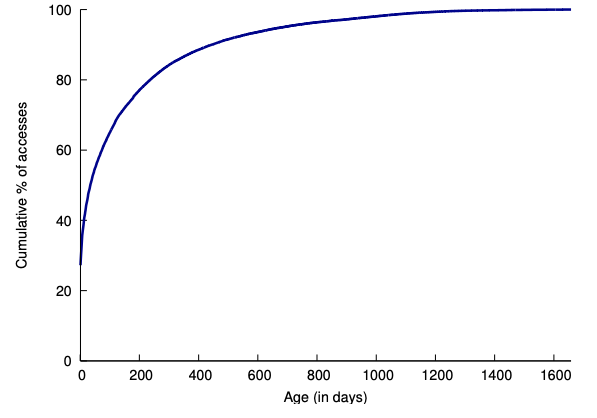
- Photos uploaded recent days have a lot of requests -> CDN and Haystack Cache are effective at serving these.
- Photo requests has
long-tailup to 1600 days which cannot be served by caching.
Traffic volume
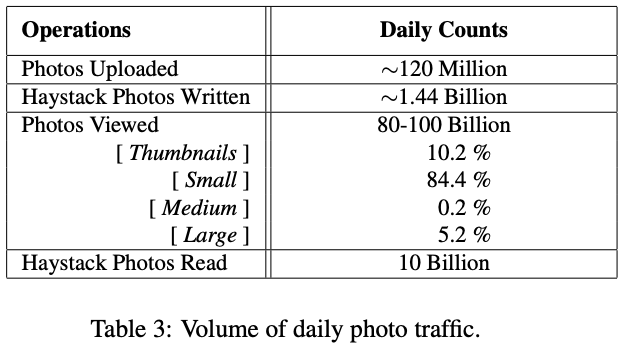
- Haystack serves 10% (10B / 100B) of photo views.
- small images has 84% of view requests -> most requests serve small files so minimize metadata is important to reduce latency.
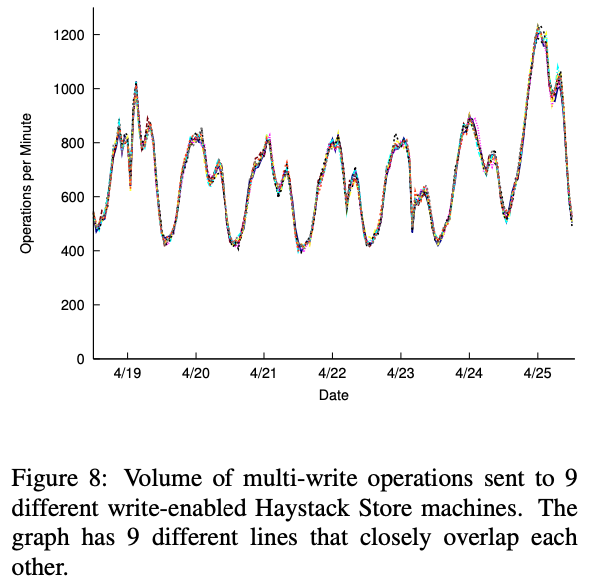
Haystack Directory: balances reads and writes across Store node well as shown in Fig 8.
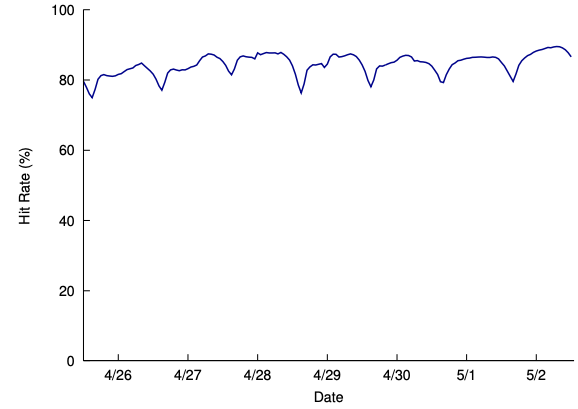
Haystack Cache: hit rate of 80% shows that it effectively reduces workloads for write-enabled Store.
Haystack Store
- benchmarks need to show that Store can process random photos reads (long-tail side) with lower latency and higher throughput than previous NFS design.
- avg num images per multi-write request = 9.27
- only multi-write is allowed to amortized the write cost
- CPU utilization is low (idle 92-96%)
Fig10
- write-enabled nodes get more read requests (4500 ops/min) than read-only (1500 ops/min) because read and delete rates are high for recent photos
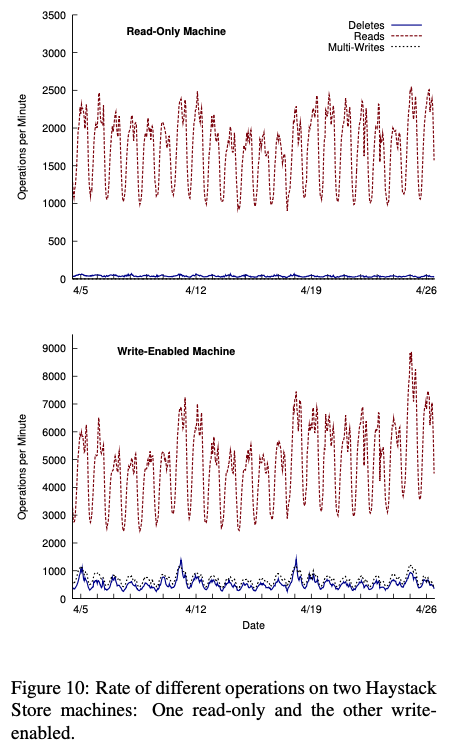
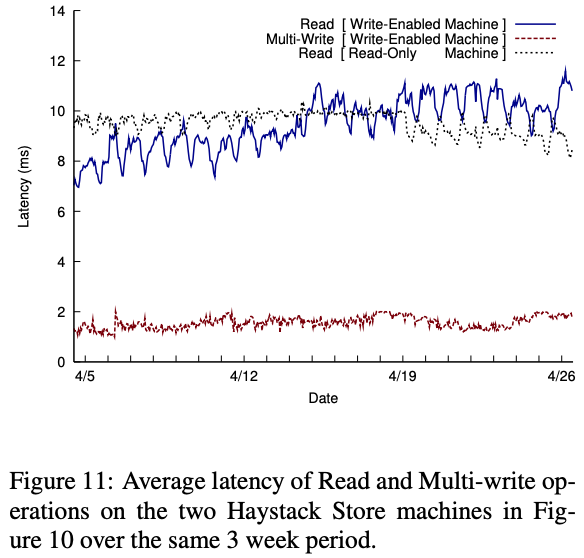
Fig11 prod avg latency of read and write nodes in fig10
- write latency is low at 1-2ms and stable even with spiky loads (3000-9000 ops/min)
- what enables stable write latency? NVRAM-backed raid controller buffer helps with async writes of needles (photos) and a single fsync for whole volume file
- read latency of read-only box is also stable despite the load variation
- read latency of write-enabled box has the shape because
- read traffic increased as num photos stored increased
- buffer-cache is more effective for read-only machine.
- recently-written photos are read back immediately because FB highlights recent content.